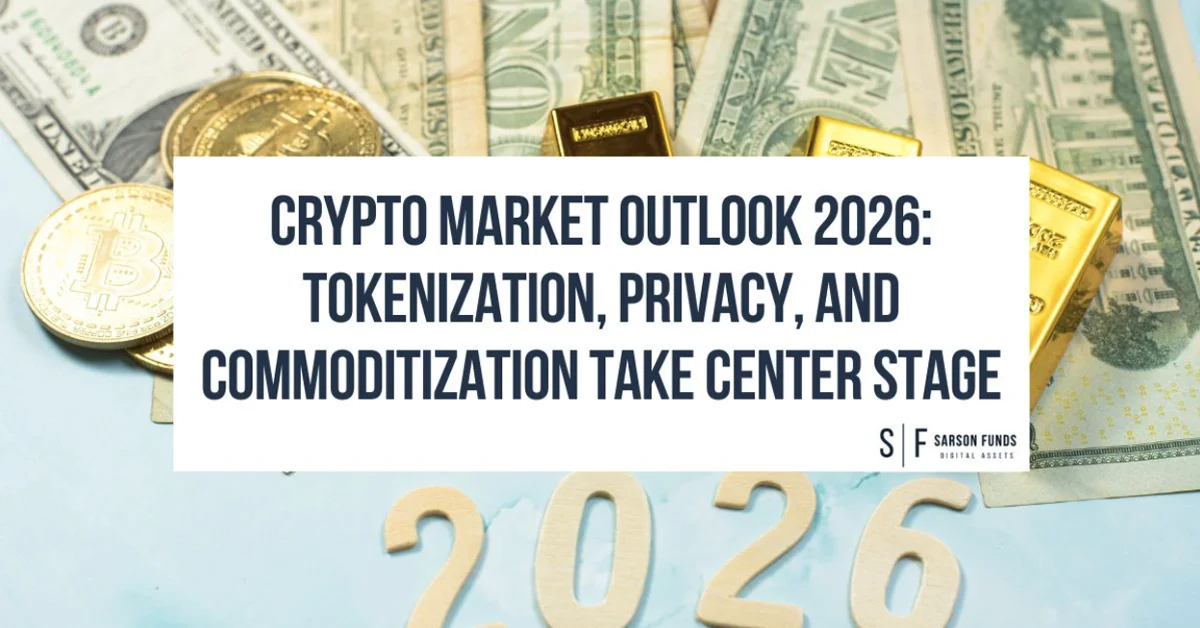
2025 delivered wild price swings for Bitcoin and altcoins, while steady infrastructure quietly advanced underneath. 2026 shifts focus toward scaling tokenization, privacy, and commoditization as the core forces that redefine crypto’s role in global finance. These trends promise structural changes to liquidity, compliance, and efficiency, positioning crypto as indispensable market plumbing.
Tokenization: From Hype to Core Infrastructure
Tokenization is evolving beyond real-world asset (RWA) buzzwords into seamless rails for Treasuries, money market funds, credit, and private equity. Banks, asset managers, and fintechs are working to drive adoption by embedding tokenization invisibly via on-chain settlement or wallets that handle collateral without extra complexity.
Market structure is transforming with 24/7 liquidity via on-chain pools and new yield curves that squeeze traditional finance margins driving down fees across the board. As tokenized assets scale, they create programmable capital layers that integrate natively with legacy systems and accelerate capital and liquidity velocity across borders, venues and investor classes.
This year, tokenization also becomes a competitive differentiator for institutions that want faster settlement, lower counterparty risk, and more flexible collateral management. By putting traditionally illiquid assets on-chain, firms can unlock fractional ownership, global distribution, and real-time risk monitoring that were impractical with legacy rails. This shift will not happen evenly across all asset classes, but where it works, tokenization will blur the lines between “crypto” and “traditional” markets.
Privacy: Compliant Transparency for Institutions
Privacy is maturing to match traditional finance standards by blending blockchain transparency with targeted compliance standards using tools like on-chain zero knowledge proofs (programmable privacy), selective disclosure, and travel rule ready wallets.The user experience is shifting from clunky mixers to compliant privacy modalities within public and permissioned blockchain networks, stablecoin networks, and payment apps. This delivers the standard of confidentiality where needed without sacrificing auditability to match the experience they are used to.
This evolution alters market dynamics by matching TradFi standards so that movements are compliant and familiar while also utilizing private pools and more refined fee structures that blockchain has made standard. Institutions gain tools for confidential position tracking and PnL reporting, which enables deeper serious participation while still meeting regulatory demands and privacy standards.
As regulators grow more familiar with cryptographic standards, privacy is increasingly seen as a must-have for serious market participants rather than a red flag. Firms that must protect client data, trading strategies, or sensitive exposures can engage with public blockchains without broadcasting their entire footprint to the world. The result is a market environment where transparency and confidentiality coexist, supporting both regulatory oversight and institutional standards.
Commoditization: Scaling Crypto Primitives
Crypto’s foundational layers are becoming commodity grade. Blockspace expands through efficient L2 throughput, stablecoins deliver frictionless on-chain dollars globally, and custody, staking, and trading infrastructure fold into existing workflows with minimal friction. These primitives now prioritize massive scale and everyday usability over novelty.
The commoditization of this infrastructure triggers a competitive landscape around fees among competing blockchain networks, centralized exchanges, and decentralized exchanges, while the power flows toward user-owned distribution, strong branding, and tight integrations rather than raw chain technology and speculation. Token economics evolve as value capture splits between network tokens and equity structures inside vertically stacked ecosystems.
In this environment, many base technologies start to look interchangeable, which shifts differentiation to where users actually live: wallets, front-ends, liquidity venues, and specialized apps. Teams that control distribution, community, and high-quality integrations can thrive even if the underlying infrastructure is cheap and abundant. Meanwhile, niche verticals like gaming, perpetual DEXs, prediction markets, DePIN, and sector-specific RWAs have room to build unique experiences that commodity rails alone cannot provide.
2026 Outlook: Interconnected Forces
Macro conditions such as easing interest rates, abundant liquidity, and growing BTC and ETH inflows are likely to overshadow activity in smaller assets to start. Tokenization built on top of commoditized rails drives volume surges with slimmer margins and onboards users through familiar entry points such as payroll stablecoins. Privacy layers help institutionalize markets and reduce reflexive volatility.
Structural winners are likely to emerge where data networks, active user stacks, and specialized verticals such as gaming, perpetual DEXs, prediction markets, DePIN, and niche RWAs compound their advantages. In contrast, purely speculative narratives lose relevance against these deeper and more durable shifts that have been gaining momentum over the last year.
Disclosures: This article is for informational purposes only and should not be considered financial, legal, tax, or investment advice. It provides general information on cryptocurrency without accounting for individual circumstances. Sarson Funds, Inc. does not offer legal, tax, or accounting advice. Readers should consult qualified professionals before making any financial decisions. Cryptocurrency investments are volatile and carry significant risk, including potential loss of principal. Past performance is not indicative of future results. The views expressed are those of the author and do not necessarily reflect those of Sarson Funds, Inc. By using this information, you agree that Sarson Funds, Inc. is not liable for any losses or damages resulting from its use.